Thought Leadership Piece
Alphabet Launches Gemini Labs Across Los Angeles Public Libraries to Expand Equitable Access to AI Education
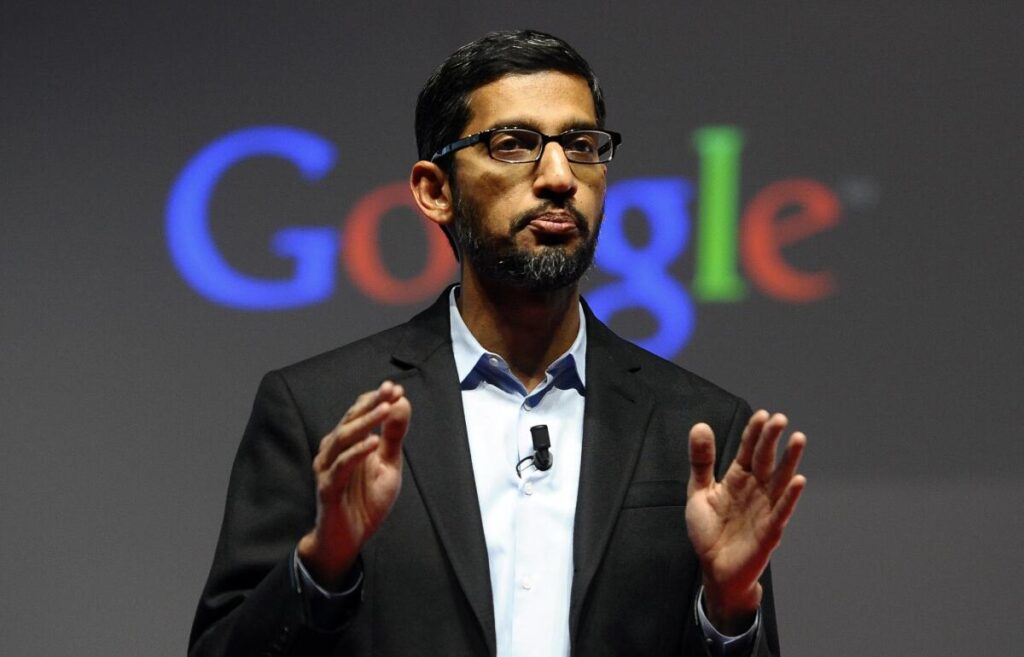
By Sundar Pichai, CEO of Google & Alphabet Inc.
LOS ANGELES – June 1st, 2026
For generations, we have understood a simple truth: access to knowledge shapes opportunity.
Public education, libraries, and the internet itself were all built on the belief that information should not be reserved for the few; it should be available to everyone. And yet, as we enter the age of artificial intelligence, we are at risk of abandoning that principle at the very moment it matters most.
Artificial intelligence is no longer a distant concept. It is rapidly becoming the foundation of how we learn, work, and create. However while AI advances at extraordinary speed, access to it, and the ability to use it effectively, remains imbalanced. This is the defining social change of our time: AI literacy is emerging as a prerequisite for opportunity, but access to that literacy is not equally distributed. We have seen this pattern before. When computers and tablets first entered classrooms, access was limited. When the internet became essential, access was uneven. Each time, the gap between those who could participate and those who could not widened before it narrowed. We cannot afford to repeat that cycle with AI.
AI literacy should not be treated as a luxury or a specialized skill. It should be treated as a public good. That means building systems where access and outcome are not determined by income, geography, or prior experience. It means ensuring that a student in any neighborhood has the same opportunity to explore, experiment, and learn with these tools as anyone else.
But access alone is not enough. We must also ensure that AI is developed responsibly and sustainably. Not only in how it is used, but in how it is built and maintained.
At Alphabet Inc., we are investing in more energy-efficient infrastructure, advancing research into sustainable AI systems, and working to reduce the environmental footprint of large-scale computing. The future of AI must not only be innovative, it must also be sustainable and be held accountable. Sustainability, in this context, is not just about energy use. It is about ensuring that the benefits of AI can be sustained across communities and generations. An AI system that excludes large segments of the population is not only unsustainable — it is fragile. This is why expanding access matters.
By bringing tools like Gemini into public spaces, we are not simply introducing new technology, we are opening new pathways for creativity, learning, and economic mobility. We are enabling individuals to move from passive users of technology to active participants in shaping it. There is perhaps no better place to begin this endeavor than at the heart of public knowledge: our public libraries. Libraries have always been equalizers, cultivating spaces where anyone, regardless of background, can access knowledge and opportunity. In a world increasingly defined by digital tools, their role only expands.
Los Angeles presents a particularly important place to begin. The Los Angeles Unified School District (LAUSD) is one of the largest and most diverse public systems in the country, serving students from a wide range of socioeconomic backgrounds, many of whom face unequal access to emerging technologies outside the classroom. The start of summer break is not just a pause in instruction; for many students, it is also a period where access to structured learning and resources becomes more limited. By launching Gemini AI Labs in all 73 Los Angeles Public Libraries at the beginning of summer, we are intentionally meeting students at a moment when the need for accessible, self-directed learning opportunities is greater than ever. Libraries, already trusted and embedded within these communities, become not just places to spend time, but places to build skills, explore new tools, and stay connected to learning when it matters most.
If AI is the next chapter in how we understand and interact with the world, then it belongs in the same spaces that have long supported learning and discovery. The future will not be shaped solely by those who build technology, but by those who understand how to use it. The question is not whether AI will define the future. It already is. The question is whether we will ensure that everyone has the opportunity to learn it.
Strategy Note
This thought-leadership piece adopts a visionary and authoritative tone to position Alphabet Inc. as a leader in both AI innovation and responsible stewardship. By framing AI literacy as a public good, the piece aligns with a key social (ESG) issue, while avoiding promotion language: digital equity. The integration of sustainability expands the narrative beyond access, reinforcing Alphabet’s commitment to environmentally responsible AI development. Referencing public institutions like libraries strengthens the connection to the Gemini AI Labs initiative, positioning the program as a natural extension of Alphabet’s broader mission to create equitable, sustainable access to technology.